Arroz avinagrado, Kani Kama, palta, kiuri y lo mejor de la literatura japonesa.

jueves, 15 de marzo de 2007

Hay quien prefiere las ortigas

Autor: Junichiro Tanizaki
Editorial: Editora Nacional,Madrid
ISBN:84-280-9400-1
Edición:Agosto 2002
Páginas:170

"Hay quien prefiere las ortigas", es la novela con la que su autor, Junichiro Tanizaki conoceria la fama en su pais natal, Japon. Publicada originalmente en 1929, ya muestra los primeros esbozos de ese manejo de la crueldad con el que la posteridad lo reconoce indiscutiblemente. Elaborada a partir de la sutileza, tradicion heredada de los autores como Soseki Natsume o Mori Ogai, Tanizaki reconstruye en esta novela de impresiones la perversidad de la vida japonesa de entreguerras. (Reseña de la editorial)

La verdad es que no se a que hace referencia la reseña de la editorial. Lo que SI se, es que el libro se trata de una pareja -Misako y Kaname- que se quiere divorciar y no puede hacerlo, por diferentes motivos. Por un lado esta su hijo, Hiroshi, que es todavia un niño y no entiende bien estas cuestiones. Por el otro lado esta el padre de Misako, un viejo chapado a la antigua casado con una chica de la misma edad que Misako, O-hara, a quien obliga a seguir las formas tradicionales Japonesas. En el medio de todo esto esta la sociedad japonesa del 1900 y representando el malestar que podria traer un divorcio para la reputacion de la pareja y su familia (en particular Misako que como mujer llevaba las de perder).

jueves, 22 de febrero de 2007

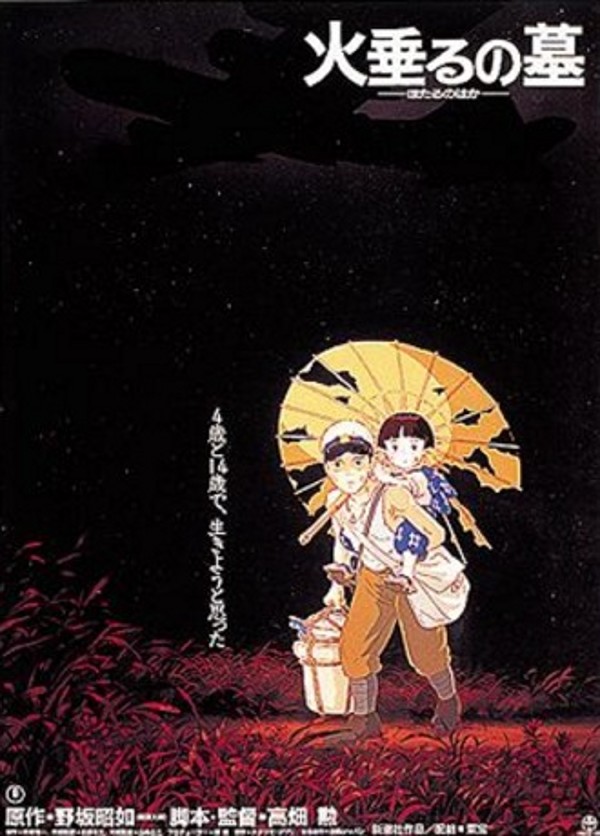
La tumba de las luciernagas-Las algas americanas

Autor: Akiyuki Nosaka
Editorial: Editorial Nacional, Madrid
ISBN: 84-299-0021-1
Clasificación: Ficción Y Literatura
Publicación: 1967
Páginas: 94

Akiyuki Nosaka, nacio el 10 de octubre del año 5 Shōwa (1930), en la ciudad de Kamakura, en la prefectura de Kanagawa.
Adoptado por una familia de Kobe, pasó su infancia en esa ciudad, misma que fue duramente bombardeada durante la Segunda Guerra Mundial, ocasionando la disrupción de la familia adoptiva, por lo que Nosaka tuvo que pasar un par de años en un orfanatorio.

La experiencia de dicho bombardeo, así como de la miseria vivida durante los últimos días de la guerra y el periodo que le siguió fue fundamental en su obra, en la cual también se hace hincapié en desorientación de los japoneses ante la pérdida del mundo en que habían vivido - como cultura y como sociedad, en una línea semejante a aquella desarrollada por Yukio Mishima- Wikipedia

Otro de esos hallazgos raros en el Parque. Son 2 historias cortitas, la primera, "La tumba de las luciernagas" es la historia de Seita, un adolescente que queda huerfano en uno de los bombardeos a la ciudad de Kobe durante la segunda guerra mundial. Seita estaba al cuidado de su hermanita ya que su padre estaba luchando y su madre se encontraba enferma. El bombardeo destruye su casa, y pierde a los pocos dias a su madre. Tratando de sobrevivir, busca refugio en casa de unos parientes donde pasa hambre y muchas necesidades. Tratando de conseguir algo mejor para su hermanita, se refugia en una cueva y por las noches sale a los campos a robar nabos, batatas o cualquier cosa para poder comer.

No les voy a contar toda la historia, ni algunos de los detalles pero se las recomiendo mucho. Por lo que vi en wikipedia, se realizo una pelicula animada basada en la historia (que no debe ser para menores de edad porque la historia es terriblemente cruel). Si lo quieren leer, lo pueden bajar aca en formato eBook.

La segunda historia esta muy buena tambien, muy al estilo Mishima. Le doy 4 estrellitas de 5 (****)

When we where orphans

WHEN WE WERE ORPHANS
ISHIGURO,Kazuo

Edición: 2000
Formato: PAPERBACK
Páginas: 368
ISBN: 0571205623
Editorial: FABER & FABER

El cuarto libro de Ishiguro que leo y uno de los mejorcitos, yo diria el 3ero despues de "The remains of the day" y "A pale view of hills". Se trata de un detective, que ya consagrado, trata de descifrar el ultimo misterio, la desaparicion de sus padres. El personaje principal, Christopher, rememora algunos acontecimientos de su vida mientras resuelve sus casos. Al transcurrir el tiempo, todas esas imagenes, esos recuerdos, lo llevan a buscar una respuesta, que, como buen detective, bien pudo inferir aunque la verdad resulta, al final, muy distinta a lo que se imaginaba.
Es una historia bastante triste y muy bien narrada aunque se vuelve un poco increible en su parte final. De todas formas el libro es excelente y como siempre el "british english" de Ishiguro es impecable. Le doy 3 estrellitas de 5 (***)

Sinopsis: "England, 1930s. Christopher Banks has become the county´s most celebrated detective, his cases the talk of London society. Yet one unsolved crime has always haunted him; the mysterious disappearance of his parents, in Old Shanghai, when he was a small boy. Now, as the world lurches towards total war, Banks realises the time has come for him to return to the city of his childhood and at last solve the mystery -that only by his doing so will civilisation be saved from the approaching catastrophe.
Moving between London and Shanghai in the inter-war years, When we were orphans is a story of memory, intrigue and the need to return; of a childhood vision of the world surviving deep into adulthood, indelibly shping and distorting a person´s life.

An artist of the floating world

Autor: Kazuo Ishiguro
Editorial: Vintage International.
ISBN: 0-679-72266-1
Publicación: Septiembre 1989
Páginas: 206

Sinopsis
: "This is the story of postwar Japan, as seen through the eyes of Masuji Ono, a retired artist. Ono is proud of his rise to a man of stature and influence in pre-war Japan. He recounts his struggle to become a famous artist; through defying his father, starting his career working in the factory-like painting workshop knocking out 'Japanese' paintings for Westerners, being taken on by a master and trained to paint in his style and to study the 'floating world', the nightlife of Japan, ultimately challenging his master in developing his own style and using his art as a propaganda tool for Japanese imperialism.

However after the war the political climate changes and people blame the imperialists for the disaster of the war. Ono's wife and son are dead, his daughter Setsuko is married and daughter Noriko is finding difficulties in securing a marriage.

Ono struggles to find his place in this changing Japan and in acknowledging that in the political climate his past is now one he should hide. A proud man, Ono refuses to rewrite history as he saw it and bow to the westernization of Japan. Through the preparations for his daughters' marriage he is forced to acknowledge his history's impropriety in the Japan of the day and its affect on his family.

There is a melancholy air as a once important man is now degraded in the eyes of his county and even his family. With neither his work, position of man of influence or as head of his family to occupy him he wanders silently from room to room.

The gently unwinding tale of Masuji Ono is told through his own recounting and dialogue with this family and old acquaintances. Nothing is said outright, the language is formal and polite to the point of not saying anything at all. The actual story floats above the text and is only completely visible to the reader. The manner in which this novel was written shows a great mastery of language and understanding of the human psyche. It teaches much about politics, art and personal histories. A subtle and beautiful masterpiece. The Artist

An Artist of the Floating World was short listed for the Booker Prize and won the Whitbread Book of the Year Award in 1986. Ishiguro also won the Booker Prize for his novel The Remains of the Day".

Muy buen libro de Kazuo, lo terminé de leer hoy. El libro me lo habia prestado Stella hace como mil años y nunca me tome el tiempo de leerlo, ahora se lo voy a poder devolver ya que compre una copia nueva para mi coleccion. Dado que Ishiguro se mudo a Inglaterra a temprana edad, el libro es "very british" por asi decirlo, aunque el tema es meramente japones. Le doy 4 estrellitas de 5 (***)

The Unconsoled

Title: "The Unconsoled"
Author: Kazuo Ishiguro
Language: English
Genre(s): Novel
Publisher: Faber and Faber
Released: 1995
Pages: 535 pp (paperback edition)
ISBN: 0-571-17718-2 (paperback edition)

Uhh..uno de los libros de Ishiguro que mas me costo leer, creo que es innecesariamente largo. De todas formas es muy divertido y uno esta constantemente tratando de entender porque Mr Ryder parece saber mas de lo que dice. El personaje principal es un pianista muy renombrado que llega a una ciudad a dar un concierto del cual ni se acuerda. Obviamente Mr Ryder tiene algunos problemas de memoria y esto complica la trama ya que no se sabe porque recuerda algunas cosas y otras no.
Comparto la opinion de otros bloggers cuando dicen que si es el primer libro de Ishiguro que leen, seguro que no les va a gustar. Me quedo, definitivamente con los anteriores aunque no deja de ser un muy buen libro. Le doy 2 estrellitas de 5 (**).

Reviews:
Jabberwock
BlackMuddyRiver
Reading Group Center

Sinopsis: "Mr Ryder, a musician acclaimed as "the world's finest living pianist...perhaps the very greatest of the century" [p. 11] has been summoned to give a performance that may be the most important of his life. But the exact nature of the impending performance eludes him, since Ryder is afflicted with large gaps of memory. He seems to have visited this place before- he soon discovers that he has a wife or mistress here and a little boy who may be his son- but he cannot remember when. He has forgotten the details of the Herculean schedule that his handlers have prepared for him. And he is repeatedly startled by figures from his English past who appear surreally in the town's winding streets, on its trams, and in the houses that Ryder visits on a geometrically increasing series of cryptic and outlandish errands.

Ryder cannot remember what he or these people are doing here, but everyone remembers him. And everyone wants something from him. In the course of the next three days, Ryder is called on to visit childhood friends, peruse albums of clippings, judge musical rehearsals, reconcile estranged families, plead the cause of a disgraced orchestra conductor, and even serve as the guest of honor at the funeral of a total stranger. Behind all these requests is the omnipresent expectation that he somehow restore the morale of a community gripped by a profound despair. It is a despair that is expressed in terms of culture, but that infects the most intimate corners of its victims' lives. For this is a town that idolizes its artists and suffers a collective breakdown when its idols fail.

It is Ryder's crippling defect of character that he can refuse none of the requests that are made of him- except, perhaps, for the ones that truly matter. Even as the pianist desperately tries to meet his "responsibilities"- and to grasp the situation that he is supposed to salvage- it becomes clear that he is both a flawed messiah and a tragically limited human being. With his exaggerated sense of public duty and his stifled, self-deluding voice, Ryder is reminiscent of another Ishiguro character, the butler Stevens who narrates The Remains of the Day. Ryder, too, is at once the beneficiary of a social order and its uncomprehending victim, a man who has sacrificed his life on the altar of a particular kind of service."

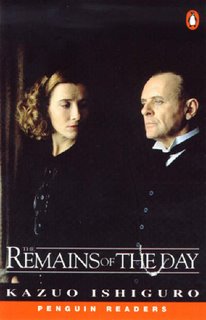
The remains of the day

Titulo: The Remains of the Day
Autor: Kazuo Ishiguro
ISBN: 0571154913 / 0-571-15491-3 (UK edition)
Editorial: Faber and Faber
Paginas: 258
Idioma: Ingles

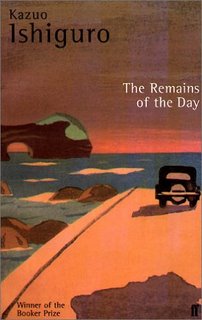
Lo mejor que leido hasta ahora, excelente es poco. Ya habia leido de Ishiguro "An Artist of the floating world" pero este libro es muy superior. El libro relata (en primera persona) la historia de Stevens, un mayordono ingles que paso 30 años sirviendo a su señor y que gracias a un viaje se da cuenta de su condicion, es una especie en extinsion, uno de los ultimos grandes mayordomos britanicos. Me resulta dificil describir la trama del libro porque esta todo bueno, realmente no tiene desperdicio. Es casi imposible no sentirse mal - y triste - por la vida del pobre Stevens, aunque el no sabe que su vida es miserable. A medida que se desarrolla la hostaria, Stevens rememora las epocas de gloria cuando la casa era visitada por las figuras mas importantes de inglaterra. El relato mezcla la tragedia con la comedia (SPOILERS AHEAD) por caso, el padre de Stevens - tambien mayordomo - se esta muriendo y su hijo SUPER PROFESIONAL sigue atendiendo a los invitados como si nada pasara!!!. En medio de la reunion que sostienen personas muy importantes del ambiente politico britanico, alguien le anuncia que su padre murio y él sigue con su trabajo argumentando ¨es lo que mi padre hubiera querido¨. La parte comica viene dade por los problemas de Stevens para detectar los chistes o bromas y sus problemas para elegir una respuesta acorde.
La historia del tigre en el comedor

¨The story was an apparently true one concerning a certain butler who had travelled with his employer to India and served there for many years maintaining amongst the native staff the same high standars he had commanded in England. One afternoon, evidently, this buttler entered the dinning room to make sure all was well for dinner, when he noticed a tiger languishing beneath the dining table. The butler had left the dining room quietly, taking care to close the doors behind him, and proceeded calmy to the drawing room where his employer was taking tea with a number of visitors. There he attracted his employer´s attention with a polite cough, then whispered in the latter´s ear: ¨I'm very sorry, sir, but there appears to be a tiger in the dining room. Perhaps you will permit the twelve-bores to be used?".
And according to legend, a few minutes later, the employer and his guests heard three gun shots. When the butler reappeared in the drawing room somo time afterwards to refresh the teapots, the employer had inquired if all was well. "Perfectly fine, thank you, sir", had come the reply. ""Dinner will be served at the usual time and I am pleased to say there will be no discernible traces left of the recent occurrence by that time"

Stevens sobre como responder a las bromas intelectuales (witticism)
"By the very nature of witticism, one is given very little time to assess its various possible repercussions before one is called to give voice to it, and one gravely risks uttering all manner of unsuitable things if one has not first acquired the necessary skill and experience. There is no reason to suppose this is not an area in which i will become proficient given time and practice, but, such are the dangers, i have decided best, for the time being al least, not to attempt to discharge this duty in respect of Mr Farraday until I have practised further"

Cuac!!!..jajajaja, pobre Stevens , era un tipo muy formal!!.

Excelente libro le doy 5 estrellitas de 5 (*****)


"The remains of the day" (la pelicula)

A pale view of hills

Author: Kazuo Ishiguro
Language: English
Genre(s) : Novel
Publisher: Faber and Faber
Released: February 1982
Pages: 192 pp

Plot:
"The highly acclaimed début by the Booker Prize-winning author of The Remains of the Day, A Pale View of Hills is the story of Etsuko, a Japanese woman now living alone in England, dwelling on the recent suicide of her daughter. Retreating into the past, she finds herself reliving one particular hot summer in Nagasaki, when she and her friends struggled to rebuild their lives after the war. But then as she recalls her strange friendship with Sachiko - a wealthy woman reduced to vagrancy-the memories take on a disturbing cast"

Mi tercer libro de Kazuo Ighiguro, habia empezado con "An Artist of the floating world", un librito que me presto Stella (Panchis) y despues segui con "The Remains of the day". Antes de salir para Uruguay pase por KEL, una libreria especializada en libros en ingles que descubri de milagro mientras boludeaba sin destino por Buenos Aires, y me compre TODO lo que encontre de Ishiguro.
Para ser la novela debut de Ishiguro tengo que decir que esta muy buena. La lei casi de un tirón ya que la trama es muy interesante y los personajes extremadamente particulares. La que cuenta la historia es Etsuko, una mujer japonesa que vive en Inglaterra, que comienza su relato con el suicidio de su hija mayor, Keiko. Etsuko, rememora una amistad que tuvo con una mujer, Sachiko, muchos años atras en un verano de Nagasaki despues de la guerra.

(SPOILERS AHEAD)
Resulta que esta Sachiko es muy rara y tiene una hijita, Mariko, que tambien tiene sus problemas. La historia se mezcla y al final no se sabe si la historia que cuenta Etsuko es lo de Sachiko ó la de ella misma. La historia de Etsuko y Keiko podria ser la de Sachiko y Mariko.
(SPOILERS END)

Muy buena novela, se las recomiendo mucho. Le doy 4 estrellitas de 5 (****)